
Introduction
Picture this: It's 9 AM, and while your colleagues are still fumbling through their inboxes trying to find their footing, you've already completed your most important task of the day. Your coffee is at the perfect temperature because you started brewing it at exactly the right moment. Your workspace is organized, your mind is clear, and you're operating at a level of efficiency that feels almost effortless.
This isn't some productivity fantasy reserved for the naturally disciplined. It's the result of work routine optimization—specifically, a powerful technique called habit stacking that transforms scattered daily actions into a seamless performance system.
The truth is, most productivity advice fails because it asks you to rely on willpower and motivation—two resources that are notoriously unreliable. Habit stacking takes a radically different approach. Instead of fighting against your brain's natural tendencies, it works with them, using existing neural pathways to install new productive behaviors almost automatically.
In this comprehensive guide, you'll discover the neuroscience behind why habit stacking works, learn how to design your own work routine stacks for maximum output, and walk away with actionable frameworks you can implement starting tomorrow morning. Whether you're an entrepreneur juggling multiple responsibilities, a remote worker struggling with structure, or a corporate professional looking to level up your performance, these strategies will help you build a workday that runs like a well-oiled machine.

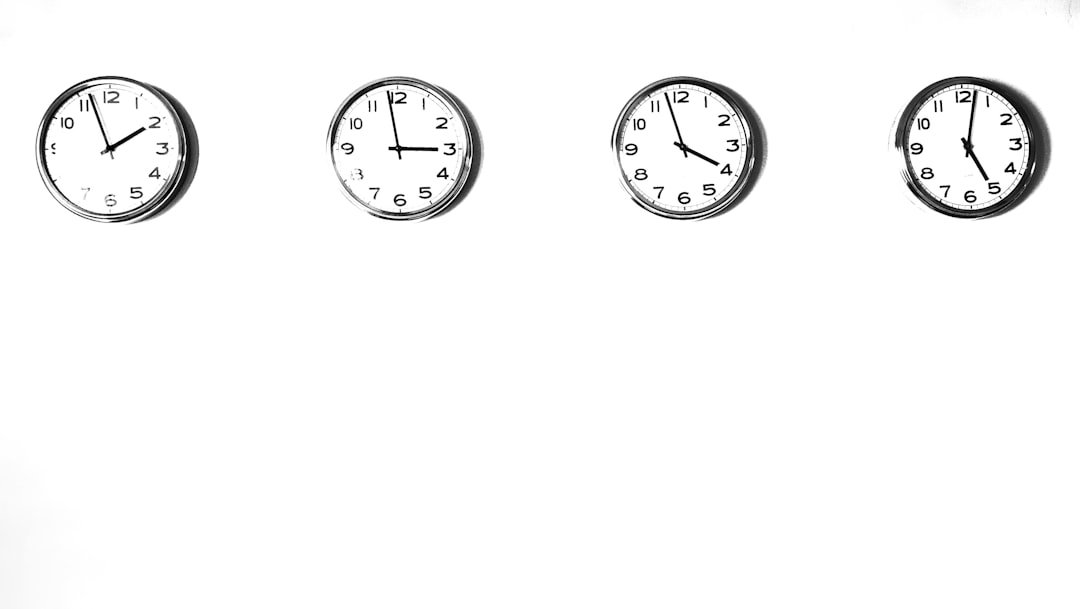
Photo by Giorgio Trovato on Unsplash
What is Work Routine Stacking?
Work routine stacking is the strategic practice of linking productive behaviors together in a deliberate sequence, where completing one action automatically triggers the next. Rather than treating your workday as a collection of isolated tasks requiring individual decisions, you create interconnected chains of behavior that flow naturally from one to another.
The concept builds on the habit stacking framework popularized by behavioral psychology researcher BJ Fogg and later expanded by James Clear in Atomic Habits. The core formula is elegantly simple:
After I [CURRENT BEHAVIOR], I will [NEW BEHAVIOR].
When applied to your work routine, this becomes a powerful architecture for professional performance. Instead of relying on vague intentions like "I should check my important emails first thing," you create specific behavioral chains: "After I set my coffee mug on my desk, I will open my project management tool and identify my three priorities for the day."
The magic lies in what neuroscientists call synaptic pruning and myelination. When you repeatedly perform behaviors in sequence, your brain literally rewires itself to make that sequence more automatic. The neural pathway connecting action A to action B becomes stronger and faster, eventually requiring almost no conscious effort to execute.
| Aspect | Traditional Routine Planning | Work Routine Stacking |
|---|---|---|
| Decision Load | Each task requires a new decision | Decisions are pre-made; actions flow automatically |
| Willpower Required | High—constant mental effort | Low—leverages existing habits |
| Failure Point | Any moment of low motivation | Only if the trigger habit is missed |
| Scalability | Limited by daily willpower reserves | Expandable as stacks become automatic |
| Consistency | Variable based on mood/energy | Highly consistent once established |
The Three Types of Work Routine Stacks
1. Temporal Stacks are anchored to specific times of day. These work best for activities that need to happen at consistent intervals, like daily planning sessions or end-of-day reviews.
2. Contextual Stacks are triggered by environmental cues—arriving at your desk, opening your laptop, or entering a meeting room. These are particularly powerful for remote workers who need to create clear boundaries between "home mode" and "work mode."
3. Completion Stacks use the finishing of one task as the trigger for beginning another. These are ideal for managing workflow throughout the day, ensuring that momentum from one completed task carries into the next.
The most effective work routine optimization strategies combine all three types, creating a comprehensive system that guides you through your entire workday with minimal friction.
Why Work Routine Optimization Matters
The average professional makes approximately 35,000 decisions per day, and each one depletes a finite cognitive resource. This phenomenon, known as decision fatigue, explains why your judgment and self-control deteriorate as the day progresses. By the time you're facing that challenging project at 3 PM, you've already exhausted much of your mental bandwidth on trivial choices.
Work routine stacking directly addresses this problem by pre-loading decisions into automated sequences. When your morning routine runs on autopilot, you preserve precious cognitive resources for the creative and analytical work that actually requires your full attention.
But the benefits extend far beyond energy conservation.
The Compound Effect of Optimized Routines
Consider the math: If an optimized work routine saves you just 30 minutes of wasted time and mental energy per day, that's 2.5 hours per week, 10 hours per month, and 130 hours per year—the equivalent of adding more than three full work weeks to your annual productivity.
But the real impact is qualitative, not just quantitative. When your routine is optimized:
- Deep work becomes accessible. You enter flow states faster because you've eliminated the friction that typically delays focused work.
- Stress decreases measurably. Uncertainty about what to do next is a major source of workplace anxiety. Established stacks remove that uncertainty.
- Energy management improves. By aligning demanding tasks with your natural energy peaks, you accomplish more with less effort.
- Professional reputation strengthens. Consistent output and reliability become your trademark.
Research published in the Journal of Personality and Social Psychology demonstrates that people with strong self-regulatory habits report higher life satisfaction and lower stress—not because they have more willpower, but because they've structured their environments to require less of it.
You do not rise to the level of your goals. You fall to the level of your systems.
How to Build Your Work Routine Stack
Building an effective work routine stack isn't about copying someone else's morning ritual or following a rigid template. It's about designing a personalized system that aligns with your specific role, energy patterns, and professional goals. Here's the systematic process for creating stacks that actually stick.
Step 1: Audit Your Current Routine
Before building new stacks, you need to understand your existing behavioral patterns. For one full work week, track your activities in 30-minute blocks. Note:
- What you actually do (not what you intend to do)
- Your energy level at each point (1-10 scale)
- Environmental triggers that preceded each activity
- Transition times between tasks
This audit reveals your existing anchor habits—the behaviors you already do consistently without thinking. These become the foundation for your new stacks. Common anchor habits include: arriving at your workspace, brewing your first coffee, checking your phone, opening your laptop, and returning from lunch.
The audit also exposes energy vampires—activities or transitions that drain disproportionate mental resources. These are prime targets for optimization.
Step 2: Identify Your Peak Performance Windows
Chronobiology research confirms that cognitive performance fluctuates predictably throughout the day based on your chronotype. Most people fall into one of three categories:
- Lions (Early Chronotypes): Peak analytical performance from 8 AM to 12 PM
- Bears (Middle Chronotypes): Peak performance from 10 AM to 2 PM
- Wolves (Late Chronotypes): Peak performance from 4 PM to 8 PM
Your routine stacks should place your most cognitively demanding work—strategic thinking, complex problem-solving, creative work—within these peak windows. Administrative tasks, emails, and routine meetings belong in your troughs.
Tools like the Morningness-Eveningness Questionnaire can help you identify your chronotype with precision.
Step 3: Design Your Stack Architecture
Now comes the design phase. You'll create three primary stacks:
The Activation Stack (Morning) This stack transitions you from "arriving at work" to "fully engaged in deep work." It should take 15-30 minutes and prepare your mind and environment for peak performance.
Example Activation Stack: 1. After I sit at my desk → I close all browser tabs from yesterday 2. After closing tabs → I open my task manager and review today's calendar 3. After reviewing calendar → I identify my #1 priority task 4. After identifying priority → I set my phone to Do Not Disturb 5. After setting DND → I begin 90 minutes of focused work on priority task
The Transition Stacks (Mid-day) These mini-stacks help you shift between different types of work—from deep work to meetings, from meetings to administrative tasks, from focused time to breaks.
Example Meeting-to-Focus Transition: 1. After a meeting ends → I take 3 deep breaths 2. After breathing → I jot down any action items in my task manager 3. After capturing action items → I review my priority task 4. After reviewing → I set a 45-minute timer and resume focused work
The Deactivation Stack (End of Day) This stack closes your workday intentionally, preventing work from bleeding into personal time while setting up tomorrow for success.
Example Deactivation Stack: 1. After my end-of-day alarm → I stop current work mid-sentence (easier to restart) 2. After stopping → I write tomorrow's top 3 priorities 3. After writing priorities → I clear my desk surface 4. After clearing desk → I close my laptop and say "Shutdown complete"
-
Track activities, energy levels, and transitions in 30-minute blocks
-
Use validated assessments to determine your optimal performance windows
-
These consistent behaviors become triggers for new productive actions
-
Create a 15-30 minute sequence that launches you into deep work
-
Build mini-routines for shifting between work modes
-
Create a sequence that closes work intentionally and preps tomorrow
-
Explicit formatting strengthens the trigger-behavior connection
-
Attempting too many changes simultaneously leads to failure
Step 4: Implement with the Two-Week Rule
The most common mistake in work routine optimization is attempting to overhaul everything at once. Your brain can only establish a limited number of new neural pathways simultaneously.
The Two-Week Rule: Implement only ONE new stack at a time, practicing it for a minimum of two weeks before adding another. This constraint feels slow but dramatically increases long-term success rates.
During implementation: - Make it visible. Write your stack on a sticky note at your workspace. - Make it small. If any single behavior in the stack feels like a burden, break it into smaller steps. - Make it satisfying. Track your completion with a simple habit tracker. The act of checking off reinforces the neural pathway. - Expect imperfection. Missing a day doesn't break the stack. Research shows that occasional misses don't significantly impact habit formation—but giving up does.
Common Mistakes to Avoid
Even with the best intentions, work routine optimization efforts frequently derail. Understanding these common pitfalls helps you navigate around them.
Mistake #1: Building Stacks That Are Too Long
Enthusiasm leads many people to create elaborate 15-step morning routines. The problem? Long chains are fragile. If any single link breaks, the entire sequence collapses.
The Fix: Keep individual stacks to 5-7 behaviors maximum. If you need more steps, create separate stacks with clear boundaries between them. Your Activation Stack might lead into your Deep Work Stack, but they should function as distinct units.
Mistake #2: Choosing Weak Anchor Habits
Your stack is only as reliable as its trigger. If you attach new behaviors to inconsistent anchors, the entire system becomes unreliable.
The Fix: Choose anchor habits that happen at the same time, in the same place, in the same way, nearly every single workday. "After I open my laptop" is stronger than "After I feel ready to work." Observable, concrete triggers beat internal states every time.
Mistake #3: Ignoring Energy Management
Scheduling your most demanding work during energy troughs is like trying to sprint through quicksand. No amount of routine optimization compensates for fighting your biology.
The Fix: Conduct an honest energy audit. Map your typical energy fluctuations across the day, then align your stacks accordingly. Protect your peak hours fiercely—this is when deep work should happen, not meetings or email.
Mistake #4: Failing to Account for Variability
Real work life isn't perfectly predictable. Meetings get scheduled unexpectedly. Emergencies arise. Rigid routines shatter against the chaos of actual professional demands.
The Fix: Build flexibility into your system. Have a "compressed stack" version for days when you have less time. Identify which elements are non-negotiable versus which can be skipped when necessary. The goal is resilient systems, not brittle perfection.
Mistake #5: Neglecting the Environment
Behavioral science consistently shows that environment shapes behavior more powerfully than willpower. If your workspace is cluttered with distractions, no routine will save you.
The Fix: Design your physical and digital environment to support your stacks. Remove friction from desired behaviors (keep your task manager open, have your priority list visible) and add friction to undesired ones (use website blockers, keep your phone in another room during deep work blocks).
- Pre-made decisions reduce cognitive load throughout the day
- Consistent triggers make behaviors automatic over time
- Compound gains accumulate as stacks become effortless
- Reduced anxiety from clear structure and expectations
- Easier to identify and fix specific weak points in your workflow
- Initial setup requires upfront time investment
- Overly rigid systems can increase stress when disrupted
- May feel mechanical until stacks become natural
- Requires ongoing refinement as work demands change
- Not all work types benefit equally from heavy structure
Best Practices for Sustainable Performance
Once you've built your foundational stacks, these advanced practices will help you maintain and enhance your work routine optimization over the long term.
Practice #1: The Weekly Review Stack
High performers don't just execute routines—they systematically improve them. Build a weekly review into your system:
Every Friday at 4 PM: 1. After opening my weekly review template → I rate each day's productivity (1-10) 2. After rating → I identify which stacks worked smoothly 3. After identifying successes → I note where stacks broke down 4. After noting breakdowns → I design one small improvement for next week 5. After designing improvement → I update my stack documentation
This meta-routine ensures your system evolves with your changing needs rather than becoming stale.
Practice #2: Strategic Stack Layering
As individual stacks become automatic (typically 2-3 months of consistent practice), you can layer additional behaviors without overwhelming your system.
The key is adjacent expansion—adding behaviors that logically connect to existing habits rather than inserting random new elements. If your Activation Stack reliably gets you into deep work, you might layer in a pre-work journaling habit that enhances your focus further.
Follow the formula: Consolidate → Automate → Expand
Practice #3: Energy-Aligned Task Batching
Combine routine stacking with task batching for multiplicative benefits. Instead of scattering similar tasks throughout the day (checking email five times, taking calls whenever they come), batch them into dedicated blocks that fit your energy profile:
- High-Energy Blocks: Deep work, strategic thinking, creative projects
- Medium-Energy Blocks: Collaborative work, meetings with agendas, learning
- Low-Energy Blocks: Email processing, administrative tasks, routine decisions
Your stacks then become the bridges between these blocks, ensuring smooth transitions without energy leakage.
Practice #4: The Implementation Intention Boost
Research by psychologist Peter Gollwitzer shows that implementation intentions—specific if-then plans—dramatically increase follow-through rates. Apply this to your stacks by adding conditional branches:
- "If I'm interrupted during deep work, then I will note where I stopped and return after exactly 5 minutes."
- "If I feel resistance to starting my Activation Stack, then I will commit to only the first step."
- "If an unexpected meeting appears in my peak hours, then I will reschedule or decline with a proposed alternative."
These pre-planned responses prevent disruptions from derailing your entire system.
Practice #5: Recovery Stack Integration
Sustainable peak performance requires intentional recovery. Build restoration practices directly into your routine architecture:
Mid-Day Reset Stack (after lunch): 1. After finishing lunch → I take a 10-minute walk outside 2. After walking → I do 2 minutes of deep breathing 3. After breathing → I review my afternoon priorities 4. After reviewing → I begin my first afternoon work block
This practice leverages the natural post-lunch energy dip rather than fighting against it, using the time for recovery so your afternoon work improves.
The 90-Minute Focus Block
Neuroscience research on ultradian rhythms suggests that the brain naturally cycles through periods of higher and lower alertness roughly every 90-120 minutes. Structure your deep work stacks around these natural cycles:
- 90 minutes of focused work
- 15-20 minute deliberate break
- Transition stack into next focus block
This rhythm aligns with your biology rather than fighting it, producing more sustainable output than attempting marathon focus sessions that inevitably degrade in quality.
Frequently Asked Questions
Conclusion
Work routine optimization through habit stacking isn't about becoming a robot or eliminating spontaneity from your professional life. It's about building an operating system for your workday that handles the mundane so your mind is free for the meaningful.
The professionals who consistently produce exceptional work aren't necessarily smarter or more talented—they've simply designed better systems. They've removed the friction between intention and action, eliminated the daily negotiations with themselves about what to do next, and aligned their behaviors with their biology rather than fighting against it.
Here's what to remember:
- Start small. One stack, practiced consistently for two weeks, beats an elaborate system abandoned after three days.
- Use strong anchors. Attach new behaviors to existing habits that already happen reliably.
- Respect your energy. Align demanding work with peak hours; save routine tasks for troughs.
- Build in recovery. Sustainable performance requires intentional restoration, not just optimization.
- Iterate continuously. Your routine should evolve as your work and life change.
The compound effect of these small optimizations is extraordinary. A 1% improvement in your daily routine, compounded over a year, doesn't yield 365% improvement—it yields something closer to 37x improvement due to the multiplicative nature of good systems.
Your optimized workday awaits. Pick one anchor habit. Attach one productive behavior. Practice it tomorrow morning. That's all it takes to begin.
Ready to Build Your Complete Productivity System?
Work routine stacking is just one component of a high-performance professional life. Explore our comprehensive guides on morning routines, deep work strategies, and energy management to build an integrated system for sustainable success.
Explore Routine Guides
Comments
No comments yet. Be the first to comment!
Leave a Comment